
🌺 Hawaiian Martial Arts Symposium 2025 – Day 2, Part 1: A Morning of Mastery 🌺

After an energizing and knowledge-packed first day, Day 2 of the Hawaiian Martial Arts Symposium 2025 began with a buzz in the air. There was a great sense of purpose — the kind of vibe you get when martial artists from across the globe are united in spirit, ready to learn, share, and sharpen their skills.
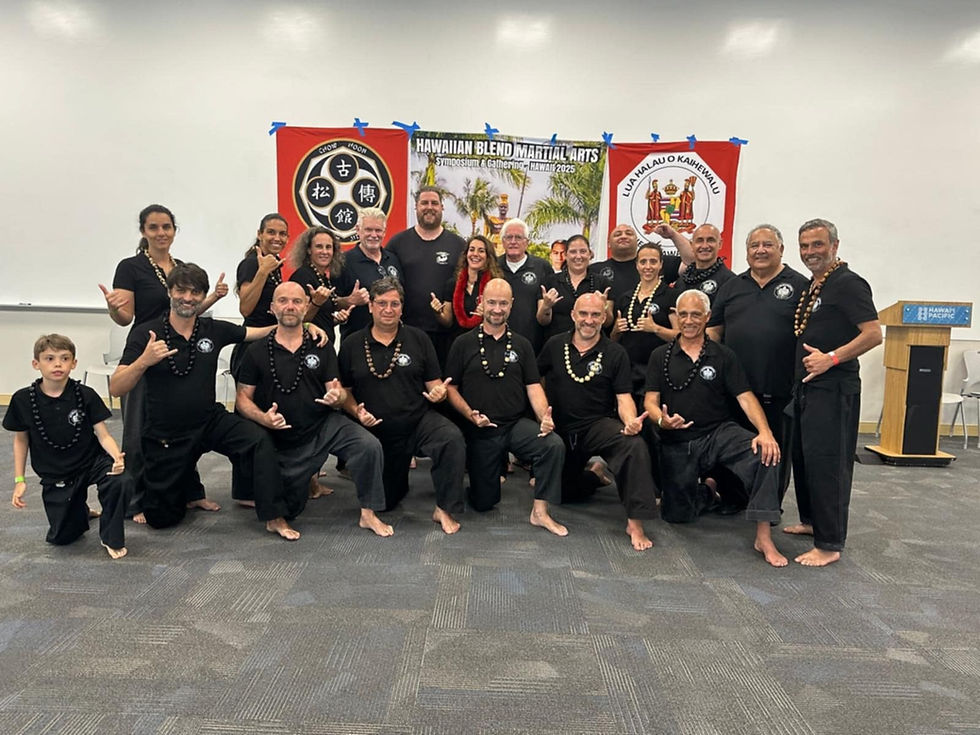
While the sun rose over the island, the conference centre began to fill with bright-eyed, bushy-tailed attendees — eager, focused, and clearly ready to put in real work. The morning began with a celebration of presence: a full photo session capturing everyone involved. Smiles, patches, belts, and respectful nods marked the occasion as practitioners from all styles stood side by side — a visual tribute to unity through diversity.

Following the group shot, the floor was cleared for a special moment — photos of the masters in attendance, whose lifetimes of dedication to their respective arts helped shape the event itself. The respect was thick in the air.

Then came the formal bow-in — a sacred ritual that goes beyond tradition. This was a moment of stillness and unity where time seemed to pause. Attendees stood shoulder to shoulder, facing the instructors, eyes sharp and posture strong. The room grew quiet — not by command, but through a shared understanding of the gravity of the moment.
With a single call of attention, everyone bowed in unison, offering their respect not only to the instructors and each other, but to the arts themselves — to the generations who came before and to the lineage they now carry forward. It wasn’t just a sign of protocol — it was a declaration of intent, humility, and readiness.
In that moment, the noise of the outside world faded. The symposium became sacred ground.
With discipline and reverence, the day officially began.
🔥 Arena 5 — A Powerhouse Line-Up
Part 1 of Day 2 saw Arena 5 come alive with a phenomenal line-up of high-caliber instructors who each brought their unique philosophies and expertise to the floor:

Professor Tim Harris opened the session with a focused, hands-on lesson centered around the application of atemi points — with a particular focus on targeting vital areas along the arms. His instruction was immediately engaging, bridging traditional knowledge with practical application. Rather than overwhelming attendees with too much theory, Tim guided us through a structured progression of combinations built around these high-value striking zones. Each sequence was purposeful, with strikes flowing naturally into takedowns and finishing movements that felt not only effective but achievable under pressure.
One of the most memorable aspects of his teaching was his innovative use of sticky notes placed directly on training partners to mark the vital points being targeted. This clever visual aid helped sharpen accuracy and allowed students to “see” their targets in a new way. It brought clarity to what can often be an abstract concept, especially for those newer to the application of pressure points or anatomical striking. More than just a gimmick, it created a fun and interactive way to drill with intent and explore different timing and entry angles.
What made his class stand out was how open-ended yet structured it was. After introducing the foundations, Tim encouraged attendees to add their own "flavor" to the combinations — promoting creative problem-solving and adaptation in real time. This balance between discipline and experimentation created a dynamic learning environment where both beginners and advanced practitioners could find value.
Tim’s teaching style is best described as practical, informative, adaptive, and flexible. He meets you where you're at, offering insight without ego and always emphasizing how principles can be scaled based on your size, style, or level of experience. He created a space that was equal parts focused and welcoming — a rare balance that made learning feel empowering rather than intimidating.
I personally found his class to be incredibly insightful. The blend of clear instruction, functional application, and space for creativity made it one of the most enjoyable sessions of the day. I genuinely look forward to training with Professor Harris again if the opportunity arises — his teaching left a strong impression that will stick with me for a long time.
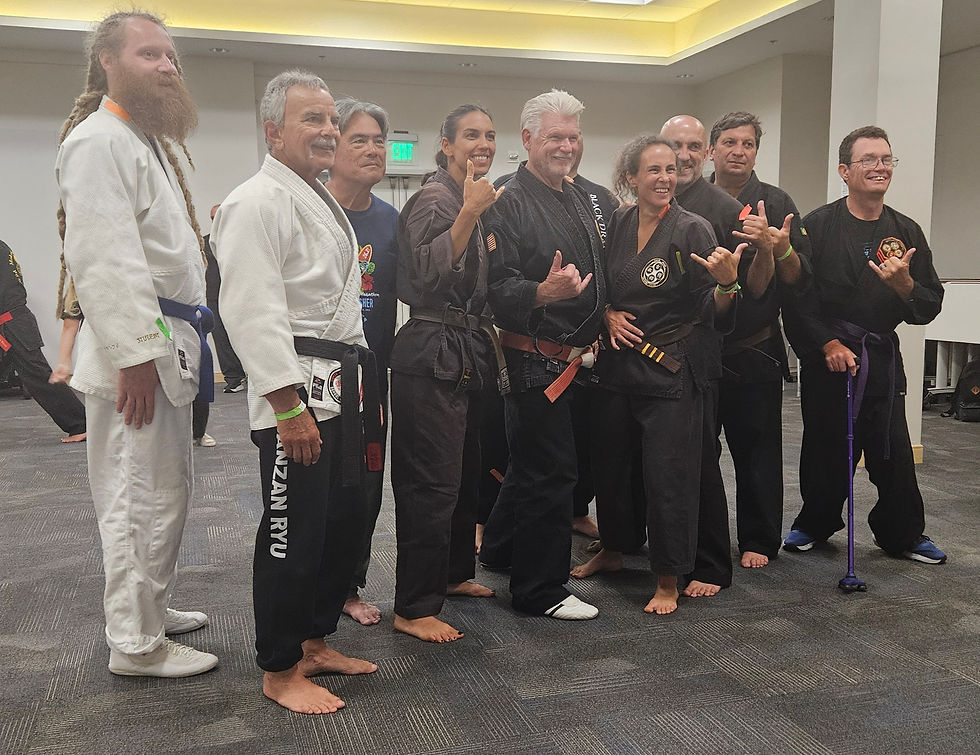
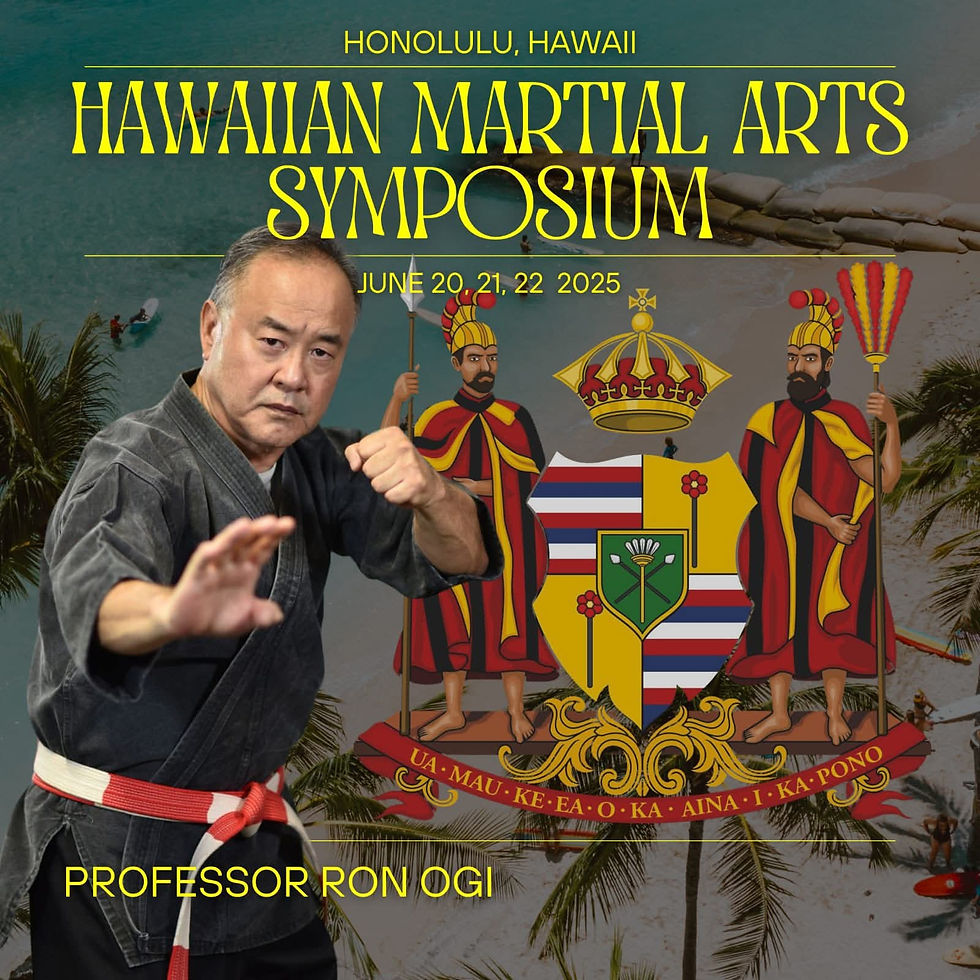
Professor Ron Ogi delivered his session with his signature blend of wisdom, humility, and warmth — a presence that immediately set the tone for a class rooted in both technical depth and personal growth. From the very beginning, Ron emphasized that martial arts is as much a journey inward as it is a physical discipline.
He began by exploring stance and balance, concepts he framed as the principle of alignment. This foundational alignment, which he referred to as “structure,” became the bedrock upon which the rest of his session was built. Through subtle adjustments and mindful positioning, Ron demonstrated how a well-structured stance could generate stability, fluidity, and even power — all without brute strength. His message was clear: through correct structure and alignment, we can reduce effort, conserve energy, and increase effectiveness — a crucial lesson, especially as we age.
What made this session especially impactful was Ron’s ability to explain complex concepts through simple, relatable analogies. He spoke about relaxation and economy of movement, not as abstract ideals, but as attainable goals achievable through conscious training. The idea that we should be striving to move with less tension and more intention resonated deeply across the room.
Ron reminded us that there is no single path to mastery. Using the timeless metaphor of yin and yang, he emphasized the importance of duality — soft and hard, stillness and motion, resistance and flow. His teaching encouraged adaptability, curiosity, and an openness to explore multiple approaches. He underscored the value of finding your own path by adapting principles to your unique body, circumstances, and philosophy.
He also introduced the concept of controlling the space between yourself and your opponent — the invisible battlefield where intention is expressed and outcomes are determined. To illustrate these ideas, he shared a range of unique drills and concepts, including the acronym S.U.M.P, along with memorable techniques like the egg punch, the unbendable elbow, causing collision, the high slap, and breaking the opponent’s guard by stealing their structure — each designed to shift control, interrupt balance, and create opportunities to capitalize.
What made his teaching so effective was not just the content, but the way he delivered it. Ron’s style was elaborative, philosophical, captivating, mind-opening, and deeply adaptive. He engaged not just the body, but the mind and spirit, leaving space for students to absorb and interpret rather than just copy. His humility and open dialogue made even the most complex principles accessible and meaningful.
Throughout the session, Ron continued to reinforce a central theme: these are principles — not rules. They are tools to explore, not rigid systems to obey. It is our responsibility as martial artists to internalize, test, and evolve them into something that reflects our own truth.
Thank you, Ron Ogi, for this enlightening and mind-opening session. It was an experience I will never forget — one that continues to echo beyond the mat and into the way I see training, teaching, and movement itself.


Professor Dian Tanaka brought grace and authority to the floor. Dian had a strong and commanding opening, introducing students to a single-stick Eskrima style. She began by breaking down the fundamentals — teaching basic strikes and footwork with clarity and precision. One of the standout drills was the figure-8 pattern, a fluid motion that seamlessly translated from stick to knife, reinforcing the concept of transferable movement across weapons.
From there, she introduced palming — first with single strikes, then progressing into double strikes. These techniques emphasized flow, timing, and control, building coordination and rhythm into each movement. Her approach encouraged students to move with purpose and speed while maintaining sharp attention to form and structure.
Dian’s teaching style was quick, effective, and delivered with a high standard of execution. She commanded respect not through volume but through the crispness of her technique and the clear expectations she set. Every drill carried an intent to sharpen reflexes and push practitioners toward precision under pressure.

Unfortunately, it felt as though this class was cut short just as it was beginning to build toward more advanced material. While we didn’t get the chance to dive deeper into the more complex applications, what she delivered in the time she had was a fantastic introduction to this particular art. It left many of us eager to learn more — a testament to her ability to spark curiosity and respect for the system she represents.


Professor Kumu Scott Merrill rounded out the morning with a session that was as technical as it was impactful — both physically and mentally. His teaching offered a gritty, hands-on contrast to the flow-focused sessions earlier in the day. While there were similarities to Professor Harris’s approach in terms of body mechanics and layered progressions, Kumu Merrill’s style leaned hard into what I like to call “munchy-crunchy” techniques — the kind of movements designed to inflict maximum pain and maximum damage in minimum time.
From the outset, his goal was clear: control your opponent, dismantle their structure, and end the conflict before it escalates. Every technique was stripped of unnecessary movement. No fluff, no filler — just raw, efficient mechanics aimed at causing decisive outcomes. He emphasized taking the opponent apart joint by joint, base by base, using their own structure against them and seizing every opportunity to disrupt balance and create vulnerability.
You could feel the intent behind every technique. Whether it was through crushing grips, sharp directional breaks, or rapid-fire transitions, his method of instruction reflected the mindset of someone who values clarity, economy, and finality in martial application. It wasn’t about dragging out the fight — it was about ending it before it began.
Kumu Merrill’s teaching style was no-nonsense, adaptable, engaging, digestible, and straight to the point. He didn’t overwhelm students with theory but delivered his content in sharp, focused bursts of instruction that hit with the same precision as his techniques. His explanations were easy to grasp, yet layered enough to challenge even seasoned practitioners. He struck that rare balance between being authoritative and completely down-to-earth.
What really elevated the experience for me was how approachable and relatable he was. Despite the intensity of the material, there was an underlying lightness to his presence. I found myself sharing moments of laughter with him, exchanging knowledge in between reps, and having genuine fun — a reminder that martial arts isn’t just about hardness and precision, but also about community and mutual respect. It brought to mind the kind of energy I experience when training back home with Professor Nathan — that perfect blend of serious skill and shared joy in the grind.
His class helped break the intensity of the morning while still delivering high-level content. The environment he fostered was relaxed but focused — a space where you could go deep into technique, ask questions without hesitation, and push your own limits with the kind of encouragement that feels authentic, not forced.
I truly appreciated Kumu Merrill’s aptitude, his attitude, and the genuine way he connects with students. His knowledge was not just taught — it was transferred, absorbed, and felt. The respect he gives is matched only by the respect he earns. I personally can’t wait to be in attendance at his next offering — because when someone teaches with that much honesty, clarity, and controlled power, you show up every time.

Well Whanau that's it for part 1 of day 2 I hope you enjoyed the read remember to check out our YouTube as well
Check out part 2 day 2 Coming soon
And just incase you forgot its BDJJA ALL DAY OOOuuusss.


Comments